Past Dinner Presentation from March 2026:
“Through the Looking Glass: Breakthroughs and Barriers in Augmented Reality for Neurosurgery”
Osamah Choudhry, MD
NYU Langone Health/Medivis, Neurosurgery
and
“Benign and Malignant Brain/Skull Base Tumors – Optimal patient selection for radiation and surgery”
Christopher Loiselle, MD
Swedish Hospital, Radiation Oncology
Thank you to our sponsors, Alexion, Globus, Mectron, Medtronic, and Penumbra for co-hosting this event with the Washington State Association of Neurological Surgeons.




Past Dinner Presentation from March 2025:
“Artificial Intelligence and Stroke“
Michael Levitt, MD, UW Medicine, Neurological Surgery
“Flattening the Learning Curve to Robotic Spine Surgery, Lessons Learned”
Anu Amin, MD, and Mahesh Karandikar, MD, PhD
UW Medicine, Neurological Surgery
Thank you to our sponsors, Aidoc, Globus Medical, Kuros Biosciences, and Medtronic for co-hosting this event with the Washington State Association of Neurological Surgeons.




Past Dinner Presentation from March 2024:
“Endoscopic spine surgery – a paradigm shift in spine care”
Christoph P. Hofstetter, MD, PhD, Professor of Neurosurgery, UW Medicine
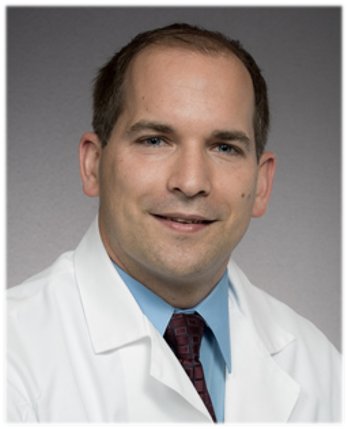 Christoph P. Hofstetter, MD, PhD is a neurosurgeon at UW Medicine in Seattle. He specializes in complex spine surgery with an emphasis on minimally invasive techniques. His primary clinical focus is the surgical treatment of degenerative spinal disorders; disc herniation, lumbar spondylolisthesis, cervical myelopathy, and spinal oncology.
Dr. Hofstetter’s clinical research focuses on the development of novel minimally invasive motion preserving spinal procedures. He is investigating the use of endoscopic techniques for the treatment of disc herniations and foraminal stenosis. His research strives to improve surgical tools, and studies clinical outcomes following these procedures. Dr. Hofstetter has extensive research experience in both clinical and basic science research and was awarded a prestigious NREF grant for his research efforts. He has authored over 50 peer-reviewed publications and numerous text book chapters and serves as a reviewer for several journals in neurosurgery and neuroscience.
Dr. Hofstetter is a faculty member in the UW Institute for Stem Cell & Regenerative Medicine.
Hofstetter Research Lab Website More information on Dr. Hofstetter
Thank you to our sponsors, Joimax, Kuros Biosciences and Globus for co-hosting this event with the Washington State Association of Neurological Surgeons


Past Dinner Presentation from January 2023:
“AI and VR in Neurological and Spine Surgery”
Dr. Samuel R. Browd, Chief Medical Officer & Co-Founder of Proprio’s Vision
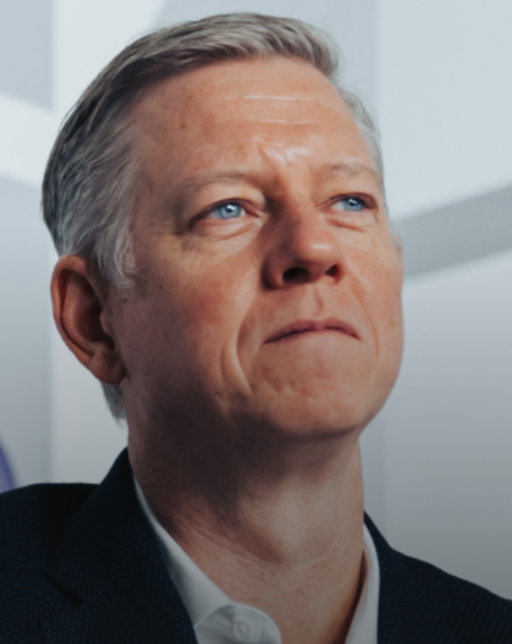 Proprio is fusing human and computer vision into a powerful new system for surgical performance and training. They are using cutting edge algorithms and custom hardware to enhance human capabilities in high precision activities such as brain and spinal surgery. The Proprio Paradigm is an advanced surgical navigation system that can provide critical information unifying pre-operative imaging and planning with intraoperative performance data.
Sam Browd, MD, PhD is Professor of Neurological Surgery at UW Medical Center, Director of Seattle Children’s Hydrocephalus Program, Medical Director of Seattle Children’s Sports Concussion Program and Director of The Sports Institute at UW Medicine. He is an attending neurosurgeon at Seattle Children’s Hospital, Harborview Medical Center, UW Medical Center and affiliated with Seattle Cancer Care Alliance.
Dr. Browd also serves as a business and medical advisor to numerous early-stage biotech companies and serves as an advisor/technical filter for numerous venture capital firms. He serves as a UW Presidential Entrepreneurial Faculty Fellow and teaches at the UW Foster School of Business, he also lectures internationally on biomedical innovation and commercialization. Dr. Browd was recognized as the University of Washington School of Medicine Inventor of the Year in 2016 and co-developed two products that were listed as Time Magazine’s Invention of the Year in 2017 and 2019. Dr. Browd was honored to be the 2021 CNS Innovator of the Year.


Thank you to our sponsors Medtronic and Sound Surgical / Atec for co-hosting this event with the Washington State Association of Neurological Surgeons.
Past Dinner Presentation October 2022:
“Laser Interstitial Thermal Therapy (LITT)”
Dr. Won Kim’s presentation focused on Laser Ablation Thermal Therapy (LITT) for oncology featuring an overview, clinical data, case examples and cost benefit.
Laser Interstitial Thermal Therapy (LITT) is a minimally invasive, MR-guided surgical technique that utilizes a laser probe to ablate or destroy unhealthy brain lesions. LITT’s applications include ablation of epileptogenic foci in patients with drug-resistant epilepsy and oncologic brain lesions, including primary and metastatic brain tumors and radiation necrosis. Based on a growing body of clinical evidence, clinical guidelines and societal recommendations supporting the use of LITT for people with brain tumors and drug-resistant epilepsy have been issued by the American Association of Neurological Surgeons (AANS), the College of Neurological Surgeons (CNS), the American Society of Stereotactic and Functional Neurosurgery (ASSFN), and National Comprehensive Cancer Network® (NCCN).
 Dr. Won Kim is an Assistant Clinical Professor in the Department of Neurosurgery at the UCLA Medical Center. He completed his neurosurgical residency training at UCLA with a fellowship in stereotactic and functional neurosurgery. His clinical interests include the treatment of primary and metastatic brain tumors deep within the brain using a wide variety of surgical modalities to best suit each individual patient and tumor type. Using technologies including the laser ablation of tumors (LITT), white matter preserving corridor surgery (BrainPath), and stereotactic radiosurgery, he is able to treat many tumors traditionally deemed “inoperable.”
Thank you to our sponsor Monteris Medical for co-hosting this event with the Washington State Association of Neurological Surgeons.
Past Dinner Lectures (2015-2020)
Save the Date: September 24-26, 2027 WSANS Annual Conference Suncadia Resort, Cle Elum, Washington |